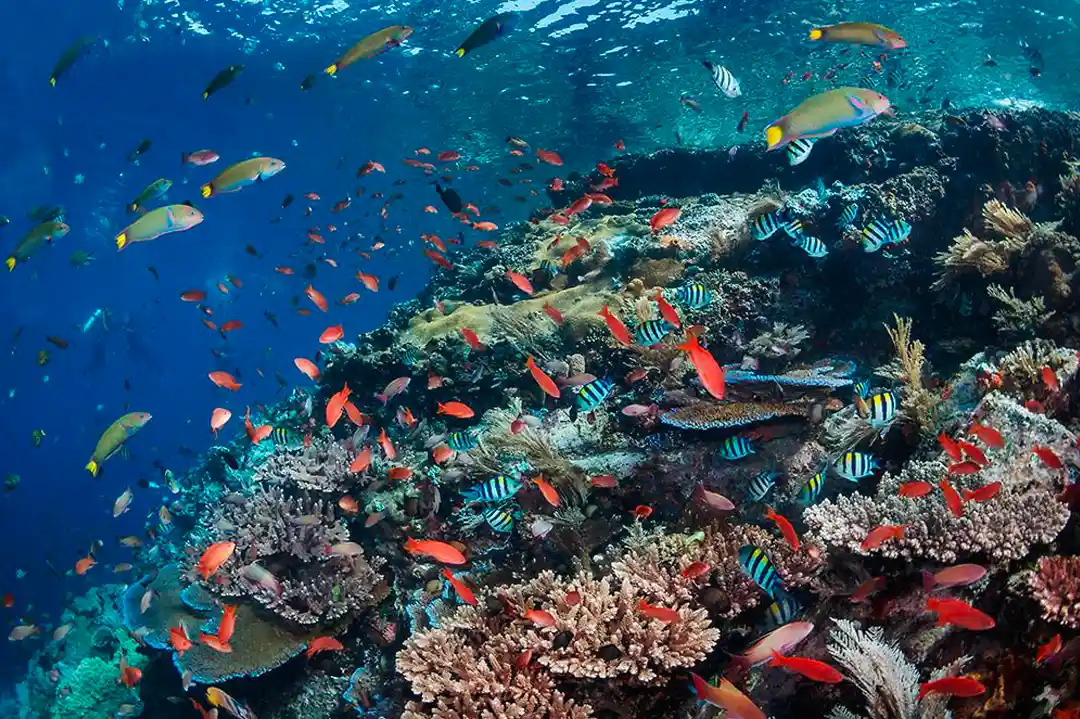
A Komodo tour can be much more than island sightseeing. Add a liveaboard itinerary, and your days can combine coral reefs, manta encounters, turtles, schooling fish, dramatic coastlines, and beaches such as Pink Beach in Komodo. For travelers planning a Komodo boat tour, this type of journey offers a practical way to experience multiple marine environments without returning to shore after each dive.
Indonesia is particularly compelling for underwater explorers because its waters contain an estimated 18% of the world’s coral reefs, more than 500 coral species, and around 2,500 fish species, according to Indonesia’s official tourism information. That biodiversity helps explain why an Indonesian liveaboard diving trip can feel different from a conventional beach holiday.
What Is an Indonesian Liveaboard Diving Trip?
A liveaboard is essentially a floating base for a multi-day diving adventure. Instead of staying at a hotel and traveling back and forth to individual dive sites, divers sleep on the boat and move between islands and reefs.
A typical day may include:
- An early morning dive
- Breakfast onboard
- A second dive at another reef
- Lunch and an afternoon surface interval
- A third dive or snorkeling session
- Sunset viewing and dinner onboard
Depending on the itinerary, some trips may also include land excursions, beach stops, trekking, or wildlife encounters.
This makes a liveaboard particularly useful in destinations where dive sites are spread across numerous islands.
What Marine Life Can You See on a Komodo Tour?
The biggest attraction is the variety. Komodo National Park sits within the Coral Triangle, and its waters support coral reefs, tropical fish, and large pelagic species. Indonesia Travel highlights encounters with manta rays, sea turtles, sharks, dolphins, whales, and dugongs throughout the wider park.
Manta Rays
Manta rays are among the most sought-after encounters. Sites including Manta Point and Mawan are associated with manta sightings, while Makassar Reef is also known as Manta Point.
Seeing a manta glide through clear blue water can be one of the defining moments of a Komodo tour, although wildlife sightings are never guaranteed.
Sharks and Other Pelagic Species
Komodo’s currents can attract larger marine animals and schooling fish. Depending on the site and conditions, divers may encounter reef sharks, tuna, trevallies, and barracuda.
Batu Bolong, for example, is known for strong currents and abundant pelagic fish. This makes the area especially interesting for experienced divers looking for dynamic underwater encounters.
Sea Turtles
Sea turtles are another possible highlight. The park’s marine ecosystems provide habitat for turtles, coral reefs, and other marine species.
For photographers, turtles can be particularly rewarding subjects because encounters often occur around reefs and in shallow snorkeling areas.
Is Diving in Komodo Only About Big Animals?
Not at all. One of the advantages of a liveaboard is the opportunity to experience different dive environments, from coral gardens to walls and pinnacles.
Macro enthusiasts may look for smaller reef inhabitants, while wide-angle photographers can focus on schooling fish, coral formations, and pelagic animals.
Indonesia’s wider marine biodiversity is enormous, so a single trip cannot possibly reveal everything. The appeal comes from moving between different habitats and giving yourself multiple opportunities to encounter something unexpected.
What Else Can You Do Between Dives?
A liveaboard trip is not necessarily nonstop diving.
Many itineraries combine underwater activities with island exploration. You might hike to a viewpoint, relax on a remote beach, photograph coastal scenery, or explore a famous island before returning to the boat.
This is one reason a Labuan Bajo trip can appeal to both divers and non-divers. Labuan Bajo serves as a gateway to Komodo National Park, and liveaboard trips allow travelers to combine diving with sightseeing across the islands.
Snorkeling can also complement scuba diving. Travelers who are not certified divers can still enjoy snorkeling in Komodo at suitable locations, while certified divers explore deeper sites.
How Many Dive Sites Can You Visit?
The answer depends on the itinerary, boat, and weather conditions. Some multi-day journeys may visit numerous sites around Komodo, Rinca, Padar, and smaller islands.
Official Indonesian tourism information describes Komodo as having at least 100 world-class dive sites and highlights locations such as Batu Bolong, Manta Point, Tatawa, and others around the national park.
That variety is a major advantage of a liveaboard: rather than spending several days around one coastal area, the boat can reposition according to the planned route, sea conditions, and diving schedule.
What Should You Expect From the Boat Experience?
The boat serves as your accommodation, restaurant, transportation, and social space throughout the trip.
Depending on the vessel, facilities can range from practical shared cabins to more spacious private rooms. Travelers researching a Komodo cruise should therefore compare:
- Number of passengers
- Cabin configuration
- Number of daily dives
- Dive equipment and facilities
- Crew-to-guest ratio
- Safety procedures
- Food and dietary options
- Route and dive sites
- Onboard amenities
The right boat depends on whether your priority is diving frequency, comfort, privacy, photography, or overall adventure.
Is a Liveaboard Suitable for Every Diver?
Not necessarily. Komodo is famous for its currents, and some dive sites can be challenging. Indonesia Travel specifically recommends experienced dive operators for sites with stronger currents.
Before booking, check the operator’s minimum certification requirements, recent diving experience requirements, and whether the itinerary is suitable for your abilities.
For beginners, a route featuring calmer sites may be more appropriate than an itinerary designed around advanced drift diving.
Why Choose a Liveaboard Instead of a Day Trip?
The main advantage is time.
A day trip limits how far you can travel and how many dive sites you can realistically visit. A liveaboard lets you travel while you eat, sleep, and relax, giving you more time to explore remote reefs.
For travelers comparing a liveaboard Labuan Bajo experience with a standard day excursion, the liveaboard format can provide a deeper immersion into Komodo’s marine environment.
It can also be easier for travelers who want to combine diving, snorkeling, beaches, wildlife, and island landscapes into one trip rather than booking separate activities.
Final Answer: What Can You Expect?
So, what can you expect from an Indonesian liveaboard diving trip?
Expect a combination of marine wildlife, coral reefs, island landscapes, and adventure. In Komodo, possible encounters include manta rays, turtles, sharks, tuna, trevallies, barracuda, and thousands of reef fish, while sites such as Manta Point and Batu Bolong add distinctive underwater experiences.
A well-planned Komodo tour can therefore turn diving into a complete multi-day expedition rather than simply a series of individual dives.
For travelers comparing a Komodo Island tour from Bali with a dedicated multi-day sailing experience, the key question is not only where you want to go but also how much time you want to spend exploring beneath the surface.
Plan Your Indonesian Diving Adventure
If your priority is marine wildlife, island exploration, and a comfortable way to move between remote dive sites, a liveaboard can be one of the most immersive ways to experience Komodo. Choose an itinerary that matches your diving experience, preferred marine life, and desired level of comfort, then allow the currents, reefs, and islands to shape the adventure.